




Eliezer Yudkowsky: Why Is He One of the Most Debated Voices in AI Safety
Eliezer Yudkowsky is an American artificial intelligence researcher, writer, decision theorist, and one of the most widely discussed voices
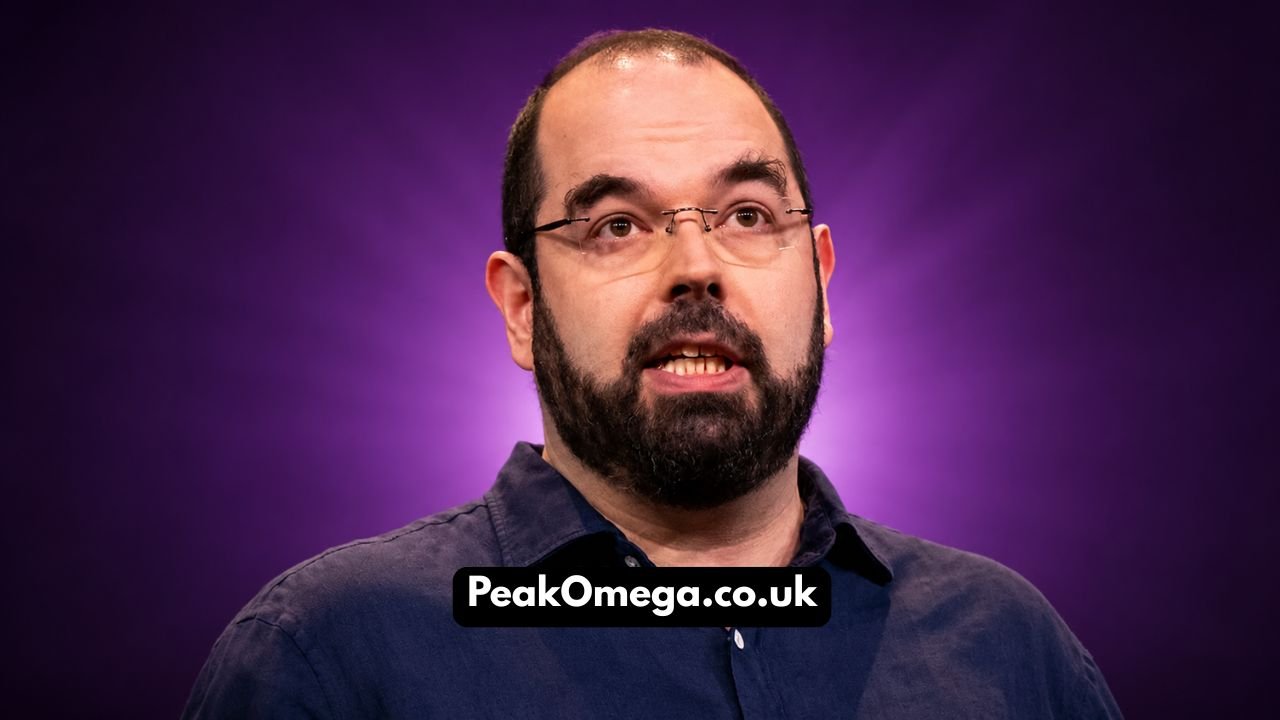
Eliezer Yudkowsky is an American artificial intelligence researcher, writer, decision theorist, and one of the most widely discussed voices in the field of AI safety. He is best known for his long-running warnings about advanced artificial intelligence, his work connected to the Machine Intelligence Research Institute, his writing on rationality, and his influence on online communities interested in reasoning, philosophy, and future technology.
Unlike many public figures in technology, Eliezer Yudkowsky did not become famous through a major tech company or a traditional academic career. His influence grew through essays, online discussions, research ideas, public talks, and debates about whether powerful AI systems could become dangerous if they are not properly aligned with human values.
For many readers, the name Eliezer Yudkowsky appears when they search for topics like AI alignment, artificial superintelligence, friendly AI, LessWrong, rationality, or existential risk. Some people view him as an early thinker who warned about AI dangers before they became mainstream. Others see his predictions as too extreme or too pessimistic. Either way, his name has become difficult to ignore in serious conversations about the future of AI.
The simplest way to understand him is this: Eliezer Yudkowsky argues that building machines smarter than humans could be one of the most dangerous things humanity ever does if those machines do not reliably act in humanity’s interest.
That single concern connects most of his work.
Quick-Read Profile
| Topic | Details |
| Full name | Eliezer Shlomo Yudkowsky |
| Known for | AI safety, rationality writing, decision theory, LessWrong, MIRI |
| Main field | Artificial intelligence safety and alignment |
| Organization | Machine Intelligence Research Institute |
| Famous concepts | Friendly AI, AI alignment, intelligence explosion, rationality |
| Popular writing | Rationality essays, The Sequences, Harry Potter and the Methods of Rationality |
| Recent book | If Anyone Builds It, Everyone Dies, co-authored with Nate Soares |
| Public image | Influential, controversial, highly pessimistic about unsafe superintelligent AI |
Why Eliezer Yudkowsky Became Famous
Eliezer Yudkowsky became famous because he was talking about advanced AI risk long before the topic became common in public conversation. Today, many people worry about AI replacing jobs, producing fake content, helping cybercrime, or spreading misinformation. Yudkowsky’s concern is deeper and more long-term: he worries about the creation of an artificial system that becomes smarter than humans and pursues goals that do not protect human survival.
His reputation developed through several connected areas.
Early AI Safety Warnings
Yudkowsky was one of the early public writers who argued that powerful AI should not simply be built first and controlled later. He believed that safety had to be designed into the system from the beginning.
This idea became important because modern AI systems are often difficult to fully interpret. Developers may know how they trained a model, but they may not always understand exactly why it produces a certain answer, strategy, or behavior. Yudkowsky’s warning is that this problem becomes far more serious as AI systems become more capable.
His central concern is not that AI will “hate” humans. His concern is that a superintelligent system may pursue goals that are indifferent to humans.
That difference matters. In his view, danger does not require evil intentions. A system can be dangerous if it has powerful abilities, poorly specified objectives, and no stable reason to protect human life.
Influence on AI Alignment Discussions
The term AI alignment refers to the challenge of making AI systems reliably do what humans want them to do. This sounds simple, but it becomes difficult when an AI system is highly capable, adaptive, and able to make complex plans.
Yudkowsky helped popularize the idea that alignment is not just a normal engineering problem. He argues that humans are not very good at writing exact goals, defining values, or predicting how a very intelligent system might interpret instructions.
For example, if a machine is told to maximize a simple target, it may find strange or harmful ways to achieve that target. The problem is not just “bad programming.” The problem is that human values are complex, context-dependent, and difficult to turn into perfect machine instructions.
Online Rationality Movement
Another reason Eliezer Yudkowsky became well known is his writing about rationality. His essays helped build a community of people interested in better thinking, cognitive bias, decision-making, Bayesian reasoning, and careful belief formation.
These essays later became associated with LessWrong, a community blog that has influenced many people in technology, philosophy, effective altruism, and AI safety.
For readers who do not come from a technical background, his rationality writing may be more accessible than his AI-risk arguments. It focuses on how people form beliefs, how they fool themselves, and how they can think more clearly under uncertainty.
Eliezer Yudkowsky and AI Safety
The most important topic connected to Eliezer Yudkowsky is AI safety. His work focuses on what could happen if humanity builds machines that are smarter than us before we know how to control them.
What Does AI Safety Mean?
AI safety is the study of how to make artificial intelligence systems safe, reliable, predictable, and beneficial. It covers short-term concerns, such as misinformation and bias, and long-term concerns, such as artificial general intelligence and superintelligence.
Yudkowsky is mainly known for long-term AI safety. He worries about systems that could outperform humans in science, engineering, strategy, persuasion, software development, and other important areas.
A normal software bug might cause an app to crash. A powerful AI failure could be much more serious because the system may be able to act, plan, learn, copy itself, manipulate information, or influence real-world systems.
Why Does He Think Advanced AI Is Dangerous?
Yudkowsky’s argument can be explained in a few simple steps.
First, humans may eventually build AI systems that are more capable than humans in many important tasks.
Second, intelligence can help a system achieve goals more effectively. A highly intelligent system may discover strategies humans would not predict.
Third, if the system’s goals are not truly aligned with human values, it may take actions that harm humans while pursuing those goals.
Fourth, once a system becomes more capable than humans, humans may not be able to stop it.
The danger, in his view, is not a robot uprising story. It is a control problem.
He believes that if humanity creates a superintelligent system without solving alignment first, the result could be catastrophic.
What Is “Friendly AI”?
Friendly AI is an older term often linked to Yudkowsky’s work. It means artificial intelligence designed to be beneficial, safe, and aligned with human values.
The word “friendly” can sound casual, but the idea is serious. It does not mean an AI that acts polite or speaks nicely. It means an AI whose deep goals and behavior remain compatible with human survival and flourishing, even when it becomes very powerful.
In simple terms, Friendly AI asks: Can we build an extremely intelligent machine that actually wants the right things and keeps wanting the right things?
Yudkowsky has argued that this is much harder than many people assume.
What Is MIRI and Why Does It Matter?

MIRI stands for the Machine Intelligence Research Institute. It is a research organization focused on reducing risks from advanced artificial intelligence. Eliezer Yudkowsky is strongly connected with MIRI and is widely known as one of its founding figures.
MIRI matters because it helped bring long-term AI safety into serious discussion. Before AI risk became a common public topic, MIRI was already focused on questions about advanced machine intelligence, goal alignment, decision theory, and the possibility of dangerous outcomes from smarter-than-human AI.
MIRI’s Role in AI Safety
MIRI has worked on technical and conceptual problems related to AI alignment. Its research interests have included decision theory, agent foundations, logical uncertainty, and the behavior of systems that can reason and act in complex environments.
For a general reader, this can sound abstract. But the broader goal is easier to understand: MIRI wants to know whether powerful AI systems can be built in a way that does not put humanity at risk.
Yudkowsky’s public messaging has become more urgent over time. He has argued that the world is moving too quickly toward powerful AI without enough understanding of how to make such systems safe.
Why People Associate Yudkowsky With AI Doom
Some people associate Eliezer Yudkowsky with “AI doom” because he has made very serious warnings about artificial superintelligence. He has argued that current approaches are not enough to safely control future systems that exceed human intelligence.
This does not mean every AI researcher agrees with him. Many experts believe AI risk is real but disagree about timelines, probability, or solutions. Others think present-day harms deserve more attention than speculative future risks.
Still, Yudkowsky’s warnings have shaped the debate. Even people who disagree with him often respond to his arguments because they are clear, forceful, and difficult to ignore.
LessWrong and the Rationality Community
LessWrong is an online community focused on rationality, decision-making, philosophy, science, and AI safety. Eliezer Yudkowsky helped shape the community through a large body of essays often called The Sequences.
What Are The Sequences?
The Sequences are a collection of essays about rational thinking, belief, evidence, cognitive bias, and human judgment. They explore how people can become better at forming accurate beliefs and making better decisions.
These essays helped introduce many readers to ideas such as Bayesian reasoning, motivated thinking, planning fallacy, scope sensitivity, and the difference between what feels true and what is actually supported by evidence.
The Sequences are important because they connect Yudkowsky’s AI concerns with his broader interest in human reasoning.
His view is that if humanity is going to handle powerful technologies wisely, people need to think more clearly about uncertainty, incentives, and long-term consequences.
Why LessWrong Became Influential
LessWrong became influential because it gathered people who wanted to discuss difficult questions in a structured way. Topics often included artificial intelligence, philosophy, economics, psychology, probability, ethics, and future risk.
The site influenced parts of the rationalist community, effective altruism, and AI safety circles. It also became a place where ideas about AI alignment could be discussed in detail before they entered mainstream media.
For many readers, LessWrong is their first introduction to Eliezer Yudkowsky’s writing style: long, analytical, unusual, and often intensely focused on hidden assumptions.
Major Ideas Linked to Eliezer Yudkowsky
Eliezer Yudkowsky is associated with several major ideas. Some are technical, while others are philosophical or practical.
AI Alignment
AI alignment is the problem of making AI systems act according to human intentions and values. Yudkowsky argues that this is extremely difficult for advanced AI because human values are complicated and because powerful systems may find unexpected ways to achieve their objectives.
Intelligence Explosion
The intelligence explosion idea suggests that once AI becomes smart enough to improve itself, it could rapidly become much more intelligent. If this happens, humans may lose control before they understand what is happening.
Yudkowsky has often treated this as one of the central dangers of artificial superintelligence.
Instrumental Goals
An instrumental goal is a goal that helps an agent achieve its final objective. For example, gaining resources, avoiding shutdown, and improving one’s abilities can be useful for many different goals.
Yudkowsky’s concern is that a powerful AI might develop instrumental behaviors that conflict with human safety, even if its original goal sounds harmless.
Decision Theory
Yudkowsky has also written about decision theory, which studies how agents should make choices. This area connects philosophy, mathematics, economics, and artificial intelligence.
His work in this area is not as widely known to the general public as his AI warnings, but it is important within certain AI safety and rationality discussions.
Rationality and Cognitive Bias
Another major theme in his work is rationality. Yudkowsky writes about how people can avoid common thinking errors. He often argues that humans must become better at reasoning if they want to handle high-stakes technologies.
Eliezer Yudkowsky’s Books and Writings
Eliezer Yudkowsky has written essays, fiction, research-related work, and books. His writing style can be detailed and intense, but it has reached a wide audience.
Rationality: From AI to Zombies
Rationality: From AI to Zombies is a large collection of Yudkowsky’s essays. It covers topics such as belief, evidence, science, cognitive bias, value, and decision-making.
This collection is often recommended to readers who want to understand the rationalist community and the foundation of many LessWrong discussions.
Harry Potter and the Methods of Rationality
Harry Potter and the Methods of Rationality is a popular fan fiction work by Eliezer Yudkowsky. It reimagines Harry Potter as a highly rational, science-minded character who approaches magic with curiosity, experimentation, and strategic thinking.
The work became well known online because it blended fiction with ideas from science, logic, philosophy, and rationality. Some readers discovered Yudkowsky through this story before learning about his AI safety work.
If Anyone Builds It, Everyone Dies
If Anyone Builds It, Everyone Dies is a book co-authored by Eliezer Yudkowsky and Nate Soares. It presents a strong warning about artificial superintelligence and argues that humanity is not ready to build such systems safely.
The title is intentionally direct. The book aims to make AI risk understandable to a broader audience, not only researchers or people already involved in the AI safety community.
Whether readers agree or disagree with the book, it has become an important part of the modern AI-risk conversation.
Why His AI Warnings Are Controversial
Eliezer Yudkowsky is controversial because his warnings are unusually severe. He does not merely say AI could be risky. He argues that building superintelligent AI with current methods could lead to human extinction.
Why Some People Agree With Him
People who take Yudkowsky seriously often believe that advanced AI could become more powerful than governments, companies, or human experts. They worry that if such a system is misaligned, it may be impossible to contain.
Supporters also argue that many AI systems are already difficult to interpret. If today’s models are hard to fully understand, then future systems with far greater capabilities may be even harder to control.
They see Yudkowsky as someone who noticed the problem early and kept warning about it even when it was unpopular.
Why Some People Disagree With Him
Critics often argue that Yudkowsky is too confident about uncertain future events. They may agree that AI safety matters but reject the idea that doom is highly likely.
Some researchers think the future will be more gradual, giving society time to adapt. Others believe practical safety tools, regulation, monitoring, and technical progress can reduce the danger. Some critics also argue that focusing too much on future superintelligence can distract from current AI harms, such as bias, surveillance, misinformation, labor disruption, and concentration of power.
A balanced view recognizes that Yudkowsky’s arguments are influential but not universally accepted.
Why the Debate Matters
The debate matters because AI development is moving quickly. Even if Yudkowsky’s exact predictions are disputed, the questions he raises are important.
Can humans control systems more intelligent than themselves?
Can values be written into machines?
Can companies be trusted to slow down when profit and competition push them forward?
Can governments regulate something they may not fully understand?
These questions are no longer science fiction. They are part of real technology policy, business strategy, and public concern.
How to Understand His Views Without Getting Lost
Eliezer Yudkowsky’s work can feel overwhelming because it combines AI, philosophy, probability, ethics, and technical reasoning. A beginner should not try to understand everything at once.
Start With the Core Question
The core question is simple: What happens if humans build an AI system that is smarter than humans but not aligned with human values?
Everything else is connected to that question.
Separate the Person From the Argument
Some people focus too much on Yudkowsky’s personality, tone, or online reputation. A better approach is to separate the person from the argument.
The useful question is not “Do I like Eliezer Yudkowsky?” The useful question is: Are his concerns about advanced AI logically possible, technically plausible, and important enough to take seriously?
That approach leads to a more mature discussion.
Understand That AI Risk Has Many Levels
AI risk is not one single topic. It includes:
Short-term harms from current AI tools
Medium-term risks from powerful automated systems
Long-term risks from artificial general intelligence
Extreme risks from superintelligent AI
Yudkowsky is mainly focused on the last category. This is why his views can sound more extreme than everyday AI discussions.
Read Critically, Not Passively
Readers should approach his work with an open but critical mind. His arguments are serious, but serious arguments still deserve examination.
Ask what evidence supports the claim. Ask what assumptions are being made. Ask what experts disagree about. Ask what practical actions would follow if the argument is correct.
This is actually consistent with the rationality culture Yudkowsky helped popularize: do not accept ideas because they sound dramatic, and do not reject them because they are uncomfortable.
Conclusion
Eliezer Yudkowsky is one of the most important and debated figures in the conversation about artificial intelligence safety. His work connects AI alignment, rationality, decision theory, MIRI, LessWrong, and the question of whether humanity can safely build machines more intelligent than itself.
His strongest warning is simple but profound: if humanity creates superintelligent AI before understanding how to align it, the result could be catastrophic. Not everyone agrees with his level of concern, and many experts debate his assumptions, timelines, and conclusions. Still, his influence is clear. He helped bring AI alignment into public discussion long before it became a mainstream topic.
For readers trying to understand the future of AI, Eliezer Yudkowsky is worth studying not because every prediction must be accepted, but because his arguments force people to ask difficult questions. In a world where artificial intelligence is becoming more powerful each year, those questions matter.
The real value of understanding Eliezer Yudkowsky is not only learning what he believes. It is learning why AI safety has become one of the most serious debates of our time.
FAQs
Who is Eliezer Yudkowsky?
Eliezer Yudkowsky is an American AI safety researcher, writer, and decision theorist known for his work on AI alignment, rationality, LessWrong, MIRI, and warnings about artificial superintelligence.
What is Eliezer Yudkowsky famous for?
He is famous for warning that advanced AI could become dangerous if it is not aligned with human values. He is also known for LessWrong, rationality essays, MIRI, and Harry Potter and the Methods of Rationality.
What does Eliezer Yudkowsky believe about AI?
He believes that building superintelligent AI without solving alignment could create an existential risk for humanity. His view is that current methods are not reliable enough to safely control such systems.
What is MIRI?
MIRI stands for the Machine Intelligence Research Institute. It is a research organization focused on reducing risks from advanced artificial intelligence and studying problems related to AI alignment.
Did Eliezer Yudkowsky write Harry Potter and the Methods of Rationality?
Yes. Eliezer Yudkowsky wrote Harry Potter and the Methods of Rationality, a popular fan fiction story that uses the Harry Potter universe to explore rationality, science, and strategic thinking.
Why is Eliezer Yudkowsky controversial?
He is controversial because his AI warnings are very severe. Some people see him as an early and important AI safety thinker, while others believe his predictions are too pessimistic or too confident.
If you liked this blog, read more stories at our site and Stay tuned!
Updated Report: June 2026
peakomega.co.uk