




What Makes Oded Galor One of the Most Important Thinkers on Growth and Inequality?
Oded Galor is a highly influential economist known for reshaping how scholars think about the long-term development of human
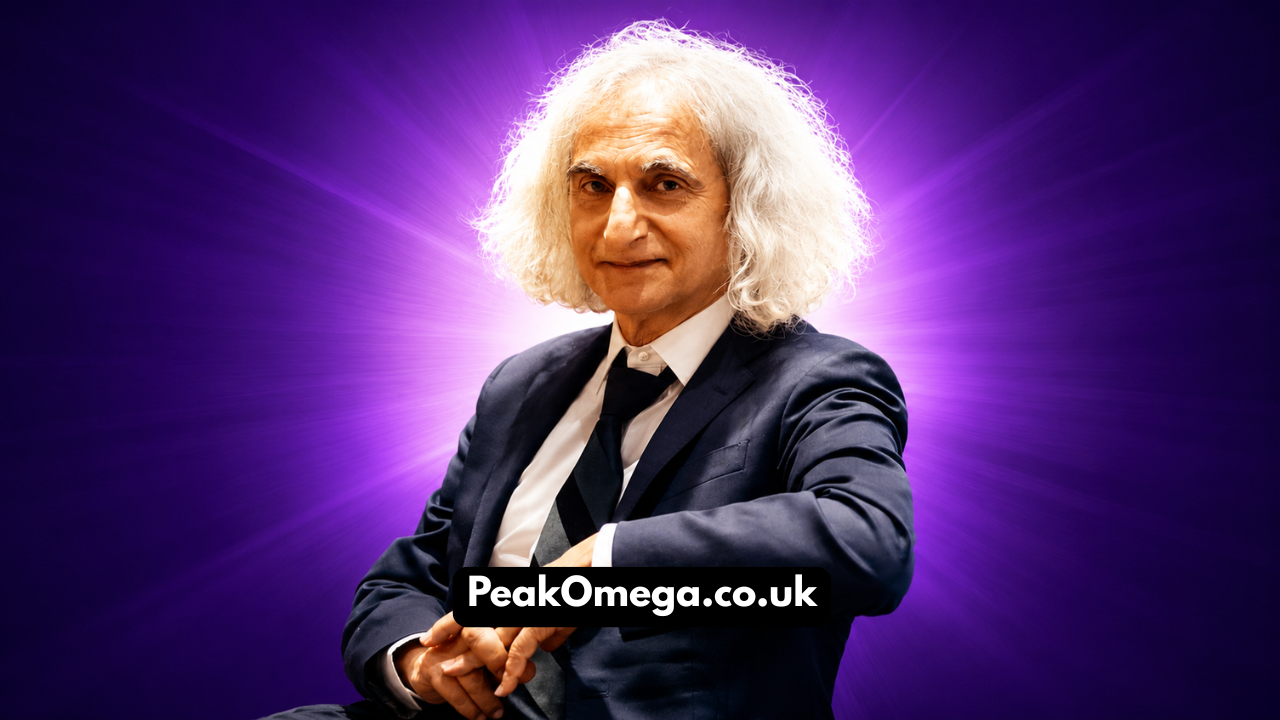
Oded Galor is a highly influential economist known for reshaping how scholars think about the long-term development of human societies. His work explores one of the biggest questions in economics and history: Why did humanity remain poor for so long, and why did sustained economic growth emerge only relatively recently?
Rather than examining only modern economies, Oded Galor studies development across the entire span of human history. He connects economics with demography, technological progress, human capital, inequality, and long-run social change. This broad perspective is what makes his work stand out.
Galor is especially recognized as the founder of Unified Growth Theory, a framework designed to explain the transition from thousands of years of near-stagnant living standards to the modern era of sustained growth. He is also widely known for his books, particularly Unified Growth Theory and The Journey of Humanity, which brought many of his ideas to both academic and general audiences.
What makes Oded Galor important is not only the topics he studies, but the scale of the questions he asks. His work attempts to connect the rise of prosperity, population change, education, inequality, and global development into a single understandable story.
Oded Galor at a Glance
| Topic | Quick Summary |
| Full Name | Oded Galor |
| Known For | Unified Growth Theory |
| Main Field | Economic growth and comparative development |
| Major Themes | Inequality, demographic transition, human capital, long-run prosperity |
| Academic Identity | Economist and professor |
| Popular Book | The Journey of Humanity |
| Influential Academic Book | Unified Growth Theory |
| Central Question | Why did modern growth appear, and why did it differ across regions? |
Why Oded Galor Matters
Oded Galor matters because he focuses on problems that sit at the center of human progress. Many economists study recessions, inflation, trade, or public policy. Galor works at a different scale. He asks:
- Why did human societies spend most of history close to subsistence?
- What changed during the transition to modern growth?
- Why did some regions industrialize earlier than others?
- Why are income levels so unequal across countries today?
- What role did education, population change, and institutions play?
These are not narrow questions. They influence how people understand civilization, prosperity, inequality, and the future of development.
A Broader View of Economic History
Traditional growth theories often focus on the modern economy, especially the last few centuries. Oded Galor argues that this approach misses a major part of the story. To understand today’s world, one must also understand the long period before modern growth.
For most of human history, technological improvements did not create lasting improvements in average living standards. Instead, they often supported larger populations. More food, better tools, or improved production could increase population size, but gains in income per person remained limited.
Galor’s work explains how humanity eventually broke out of that pattern. This shift from stagnation to sustained growth is one of the most important transformations in human history.
A Link Between Past and Present
Galor’s contribution is especially powerful because it links distant historical forces with modern global inequality. He studies how geography, demography, institutions, human capital, and technological adaptation influenced the timing of economic takeoff in different societies.
This helps explain why some countries reached sustained growth earlier, while others remained behind for much longer. Instead of treating modern inequality as a sudden or isolated problem, Galor places it inside a very long historical process.
Oded Galor and Unified Growth Theory
The idea most closely associated with Oded Galor is Unified Growth Theory. It is a major framework in economics that attempts to explain development across the whole course of human history, from the earliest societies to modern economies.
What Is Unified Growth Theory?
Unified Growth Theory seeks to explain three broad stages of development:
| Stage | Main Features |
| Malthusian Era | Low income per person, slow technological change, population growth absorbs economic gains |
| Transition Era | Technological progress accelerates, human capital becomes more important, fertility patterns change |
| Modern Growth Era | Sustained income growth, improved education, lower fertility, rising standards of living |
The central idea is that economies did not suddenly become modern by accident. Instead, internal forces built up over long periods until a transition became possible.
The Malthusian Trap
One of the key ideas in Galor’s work is the Malthusian trap. In pre-modern societies, improvements in production often increased the population rather than permanently raising average income. When food supply improved, more children survived and populations expanded. Over time, resources per person fell again, pulling living standards back toward earlier levels.
In simple terms, societies could become larger without becoming much richer per person.
This explains why, despite inventions and occasional progress, average living standards changed slowly for centuries.
The Escape From Stagnation
Oded Galor’s theory asks how humanity escaped this long-standing pattern. His answer emphasizes a combination of forces:
- Faster technological progress
- Greater value placed on education and skills
- Changes in family size
- Increased investment in children’s development
- Shifts in the relationship between population and productivity
As economies became more technologically complex, human capital became essential. Parents and societies had stronger incentives to invest in education rather than simply having larger families. This contributed to the demographic transition, where fertility rates eventually declined.
The result was transformative: economic gains were no longer fully absorbed by population growth. They began to translate into sustained increases in income per person.
The Big Questions His Work Tries to Answer
Oded Galor’s work revolves around a small number of very large questions. These questions are central to economics, history, and development studies.
Why Did Growth Take So Long to Begin?
For thousands of years, human societies experienced only limited improvements in average living standards. Galor explains this by showing that technological progress alone was not enough. As long as population growth absorbed productivity gains, societies remained close to subsistence.
The real breakthrough came when technological advancement created a stronger demand for education and skills. This altered household decisions, labor needs, and the role of knowledge in production.
Why Did Some Nations Grow Earlier Than Others?
Another major theme in Oded Galor’s work is the uneven timing of development. The rise of modern economic growth did not happen everywhere at once. Some regions experienced industrialization and sustained income growth earlier, while others remained in older development patterns for longer.
Galor examines how deep-rooted factors influenced these differences, including:
- Geography
- Population dynamics
- Institutions
- Cultural adaptation
- Access to education
- Trade patterns
- Historical trajectories
The timing of the transition to modern growth became a crucial source of global inequality.
Why Does Inequality Persist Across Countries?
Galor’s framework suggests that large differences in wealth between nations are not simply the result of short-term policies or isolated events. They often reflect long historical processes that shaped each society’s path into the modern growth era.
This does not mean history determines everything forever. Instead, it means development policy becomes stronger when it understands the deeper roots of inequality.
Major Ideas Associated With Oded Galor
Several major concepts appear again and again in discussions of Oded Galor. Understanding them helps readers grasp why his work has attracted so much attention.
Human Capital
Why Education Matters in His Theory
Human capital refers to the knowledge, skills, health, and capabilities people develop over time. In Galor’s work, human capital becomes especially important during the transition from stagnation to growth.
When technological change accelerates, societies need workers who can learn, adapt, and use increasingly complex tools. This raises the value of education and encourages greater investment in children’s development.
For Galor, education is not a side issue. It is one of the main engines that helps economies break away from stagnation.
Demographic Transition
The Shift From Quantity to Quality
The demographic transition describes the shift from high birth and death rates to lower birth and death rates. In Galor’s framework, this shift is deeply linked with economic development.
As education becomes more important, families often choose to invest more resources in fewer children. This creates a quantity-quality trade-off, where the focus moves from having more children to providing better opportunities for each child.
This change helps productivity gains produce lasting increases in income per person.
Inequality and Development
How Distribution Can Affect Growth
Oded Galor also contributed to the study of inequality and macroeconomic development. One influential line of work examines how unequal access to education and capital can affect long-run growth.
If poorer households cannot invest adequately in education, an economy may lose potential talent and productivity. In this sense, inequality is not merely a social outcome; it can also influence the development process itself.
Galor’s work helped establish that the distribution of resources can shape economic growth, not simply reflect it.
Long-Run Historical Forces
Why the Distant Past Still Matters
A distinguishing feature of Oded Galor’s research is his willingness to examine very long historical horizons. He looks at how factors from the distant past may influence present-day development patterns.
This approach does not reduce economics to history, but it does challenge the idea that modern prosperity can be fully understood without considering older structural forces.
His work suggests that differences in contemporary outcomes can be linked to the long-run interaction of:
- Human adaptation
- Population dynamics
- Geography
- Cultural and institutional development
- Technological evolution
Important Books by Oded Galor
Oded Galor’s books are central to his public and academic influence. They present his ideas at different levels of complexity and for different audiences.
Unified Growth Theory
A Landmark Academic Contribution
Unified Growth Theory is the major academic work most closely associated with Galor’s name. The book presents a comprehensive framework for understanding how economies moved from stagnation to sustained growth.
It explores:
- Why long-run growth was absent for most of history
- How technological progress and population interacted
- Why human capital became increasingly important
- How demographic transition supported modern growth
- Why global inequality emerged alongside prosperity
This book is often treated as a foundational contribution to the study of long-term economic development.
The Journey of Humanity
A Wider Public Introduction to His Ideas
The Journey of Humanity presents many of Galor’s ideas for a broader audience. Instead of writing only for specialists, he explains the long arc of human development in more accessible language.
The book focuses on questions such as:
- How did humanity move from survival to prosperity?
- Why did growth arrive so late?
- Why has development been so uneven across the world?
- What can the past teach us about future challenges?
This book helped make Oded Galor’s theories more visible outside academic economics.
It is especially appealing to readers interested in history, inequality, global development, and the origins of modern prosperity.
Key Research Contributions
Oded Galor’s influence is not limited to one theory or one book. His research has affected several fields within economics and development studies.
The Galor-Zeira Model
Inequality, Credit Constraints, and Growth
One of Galor’s important contributions, developed with Joseph Zeira, examined how income distribution can influence macroeconomic outcomes. The model challenged the assumption that inequality is irrelevant to long-run development.
The core idea is that when capital markets are imperfect, poorer individuals may be unable to invest in education, even if they are capable. This can reduce the economy’s overall growth potential.
This insight helped shift attention toward the economic consequences of unequal opportunity.
Population, Technology, and Growth
Connecting Demography With Economic Change
Galor’s work with David Weil explored the long-run relationship between population growth, technological progress, and income. This research helped formalize the transition from a Malthusian world to a modern growth regime.
The model highlights how population growth can initially support innovation, yet eventually become less central as human capital and education gain importance.
Human Evolution and Development
An Interdisciplinary Edge
Another notable aspect of Oded Galor’s work is his interdisciplinary ambition. He has explored how long-run human adaptation and diversity may relate to economic development patterns. This field is complex and often debated, but it reflects Galor’s larger goal: to understand development as a process shaped by many interacting forces across time.
His approach stands out because it blends economics with ideas from demography, history, and broader social science.
Why His Work Reaches Beyond Economics
Oded Galor’s work appeals to more than economists. It is relevant to:
- Historians interested in the rise of modern societies
- Policy thinkers focused on inequality
- Development scholars studying growth barriers
- Readers interested in the causes of prosperity
- Anyone curious about why the modern world looks so unequal
A Framework for Understanding Modern Prosperity
Galor does not treat prosperity as inevitable. His work shows that the modern growth era is historically unusual. For most of human existence, societies did not experience steady improvements in income, health, and education.
That realization makes modern development seem more remarkable, but also more fragile. It raises important questions about how societies can sustain progress and reduce inequality.
Relevance for Today’s Development Debate
The themes in Oded Galor’s research remain highly relevant. Countries continue to face challenges involving:
- Unequal access to education
- Demographic change
- Technological adaptation
- Productivity gaps
- Institutional weaknesses
- Persistent differences in living standards
His work suggests that long-term development requires more than short-term fixes. It requires understanding the historical, human, and structural conditions that support sustained growth.
Common Misunderstandings About Oded Galor
He Is Not Only a “Growth Economist”
While growth is central to his work, Oded Galor also studies inequality, population, human capital, and long-run development. His research is broader than standard growth theory.
His Work Is Not Just About the Industrial Revolution
The Industrial Revolution is important in his framework, but Galor’s perspective begins much earlier. He looks at the entire path from pre-modern societies to modern prosperity.
His Ideas Are Not Only for Academics
Although his theoretical work is sophisticated, many of the questions he asks are deeply human and accessible. His popular writing makes his ideas relevant to general readers.
He Does Not Explain Inequality With One Simple Cause
Galor’s work highlights multiple interacting factors. He does not reduce global inequality to a single event, institution, or policy. Instead, he studies how forces accumulated over long periods.
Conclusion
Oded Galor is one of the most significant thinkers in modern economics because he asks unusually large questions and answers them with an unusually broad framework. His work does not focus only on markets or short-term policy. It explores the entire human journey from subsistence to prosperity.
Through Unified Growth Theory, he explains how population growth, technological change, human capital, and demographic transition reshaped the world. Through books such as The Journey of Humanity, he makes these ideas accessible to readers beyond academia. Through his research on inequality and development, he shows that the past continues to influence present-day prosperity.
The lasting importance of Oded Galor lies in his ability to connect history, economics, and human development into one compelling explanation of how the modern world emerged. For readers trying to understand growth, poverty, inequality, and the future of global development, his work remains highly valuable.
FAQs
What is Oded Galor best known for?
Oded Galor is best known for founding Unified Growth Theory, a framework that explains how human societies moved from long periods of stagnation to sustained economic growth and why this transition created major inequality across nations.
What does Oded Galor study?
He studies economic growth, comparative development, inequality, demography, human capital, and the historical forces that shape prosperity. His work often connects economics with long-run human development.
What is Unified Growth Theory in simple words?
Unified Growth Theory explains why humanity remained poor for most of history, how technological progress eventually changed that condition, and why education, demographic transition, and human capital became essential to modern prosperity.
What is The Journey of Humanity about?
The Journey of Humanity is Oded Galor’s book for a broad audience. It explains the origins of economic growth, why inequality emerged between nations, and what long-run history reveals about the modern world.
Why is Oded Galor important in economics?
He is important because he developed a large-scale explanation of human development that connects population, technology, education, inequality, and long-run prosperity. His work has influenced growth theory and development economics.
How does Oded Galor explain global inequality?
He argues that global inequality is deeply connected to differences in the timing of the transition from stagnation to sustained growth. Regions that entered modern growth earlier gained lasting advantages, while others experienced delayed development.
If you liked this blog, read more stories at our site and Stay tuned!
Updated Report: May 2026
peakomega.co.uk